

Mill Liner
ZM INDUSTRY CO.,LTD established in 2003, is an international company dedicated to providing comprehensive manufacturing and services of metallurgical equipment for the mining and metallurgy industry. Our products mainly include grinding mill, girth gear, mill liner, manganese steel casting, excavator spare parts, crusher spare parts and custom products.
-
![Liner Segment]() Liner SegmentZM INDUSTRY CO., LTD. manufactures wear-resistant liner solutions using ASTM A532 Class III Grade A high chromium alloy iron with 25% Cr content. With ≥600 BHN hardness, our products deliver...read more
-
![Spring Plate]() Spring PlateS355 JR Steel – Strong, stable, and suitable for heavy-duty gear systemsread more
True Load Distribution – Reduces stress concentration in girth gear drives
Vibration Reduction – Improves gear... -
![Discharge Cooler Grate]() Discharge Cooler Grate330 SS Material – Heat-resistant stainless steel ensures durability in high-temperature discharge environments.read more
Optimized Grate Design – Improves airflow and material cooling... -
![Chute Liner]() Chute LinerHigh Chrome Iron Material – Exceptional wear resistance and impact strength for heavy-duty material handling.read more
Cast Liners & Bolts – Complete set including precision cast liner bolts for secure... -
![Concave Liner]() Concave LinerAT-2105 HT Alloy Steel – Heat treated to 400 BHN for extended wear life.read more
Optimized Crushing Profile – Ensures stable chamber geometry and consistent output
Heavy-Duty Application –... -
![Ring Liner]() Ring LinerThe Ring Liner is a critical wear-resistant part widely used in ball mills, SAG mills, and grinding systems. It serves as a protective armor to minimize shell wear, enhance grinding efficiency,...read more
-
![Ball Mill Liner]() Ball Mill LinerBall mill liner is a component used to protect the cylinder from the direct impact and friction of the grinding body and materials, which helps to improve the mill's grinding efficiency, increase...read more
-
![Concave Mill Liner]() Concave Mill LinerConcave mill liner can be used as various types of ball mill liners, which are widely used in wet ball mills in mineral processing plants, dry ball mills in cement plants, fine mills, and can also...read more
-
![Sag Mill Liner]() Sag Mill LinerSAG mill liner is mainly composed of turntable and liner. Among them, the turntable is the core component of the equipment, which is mainly used for grinding and material conveying. In the dry...read more
-
![Mill Liner Cr-mo Steel]() Mill Liner Cr-mo SteelMill liner Cr-Mo steel is a material with good abrasion resistance and corrosion resistance, which is widely used in mining, metallurgy, electric power and other industries for wear protection of...read more
-
![Ball Mill Rubber Liner]() Ball Mill Rubber LinerBall mill rubber liner is a wear-resistant part made of rubber material, which is commonly used in the equipment of mining, metallurgy, electric power and other industries, such as conveyor, ball...read more


Why choose us?
Quality Control
In addition to equipment manufacturing, ZMI also focuses on the production of spare parts for mining equipment. Our spare parts undergo strict quality control to ensure their reliability and durability.
Rich Experience
After more than 20 years of unwavering dedication, ZMI has achieved remarkable success, evolving from a startup to an international company with an annual production value of 8000 tons.
High Quality
The company has consistently upheld high standards and principles of quality. Through continuous innovation and improvement, ZMI has risen to become a leading service provider in the international mining industry.
Facilities And Expertise
Through its integrated operational processing system, world-class facilities and expertise, as well as the principles of integrity and cost control, ZMI has emerged as a standout player in the mineral industry, offering clients perfect solutions.
Benefits of Mill Liner
Extended lifespan
Mill liners provide a protective surface that reduces wear and tear on the interior of the mill, thereby extending its lifespan.
Improved grinding efficiency
By reducing the wear and tear on the mill, liners can help to improve the grinding efficiency of the mill, resulting in higher production rates and improved energy efficiency.
Enhanced safety
Mill liners can help to improve safety in grinding mills by reducing noise levels and minimizing vibrations.
Product Specifications
|
Product name |
Mill Liner |
|
Size |
All kinds, customer can customize |
|
Material |
High chrome alloy iron, include 27%Cr; 15%Cr-Mo; Cr-Mo low alloy steel; Cr-Mo-Ni alloy steel |
|
Place of Origin |
Henan, China |
|
Brand Name |
Maohua |
|
Warranty of core components |
1 Year |
|
Port |
Qingdao, China or Shanghai, China |
Types of Mill Liner
Steel liners
Steel mill liners are the most widely used type of mill liner, and they are typically made of high-strength steel alloys such as manganese steel, chrome steel, or Ni-hard. These liners are strong, durable, and resistant to wear and impact, making them suitable for use in high-wear applications such as grinding mills.
Rubber liners
Rubber mill liners are another popular type of liner used in grinding mills. They are typically made of natural or synthetic rubber and offer several advantages over steel liners, including better shock absorption, reduced noise levels, and improved grinding efficiency.


Composite liners
Composite mill liners are made of a combination of materials, such as rubber and steel or rubber and ceramics, to provide a more robust and durable liner that offers the benefits of both materials. Composite liners are known for their excellent wear resistance, impact resistance, and energy absorption.
Magnetic liners
Magnetic mill liners are a relatively new type of liner that uses magnetic fields to hold the grinding media in place. These liners are typically made of a ferromagnetic material and offer several benefits over traditional liners, including reduced downtime for maintenance, improved safety, and increased grinding efficiency.
Following tests and inspections:
1.Chemical, mechanical and microstructure testing by an independent laboratory
2.Qualification of welding procedures and specifications
3.NDT tests including UT, RT, MT and PT
4.Dimensional and geometric run-out and concentricity tests
5.German GS-1000 direct-reading spectrograph
6.Micro Scope
7.Technical data packs including all reports are delivered on completion of every project.

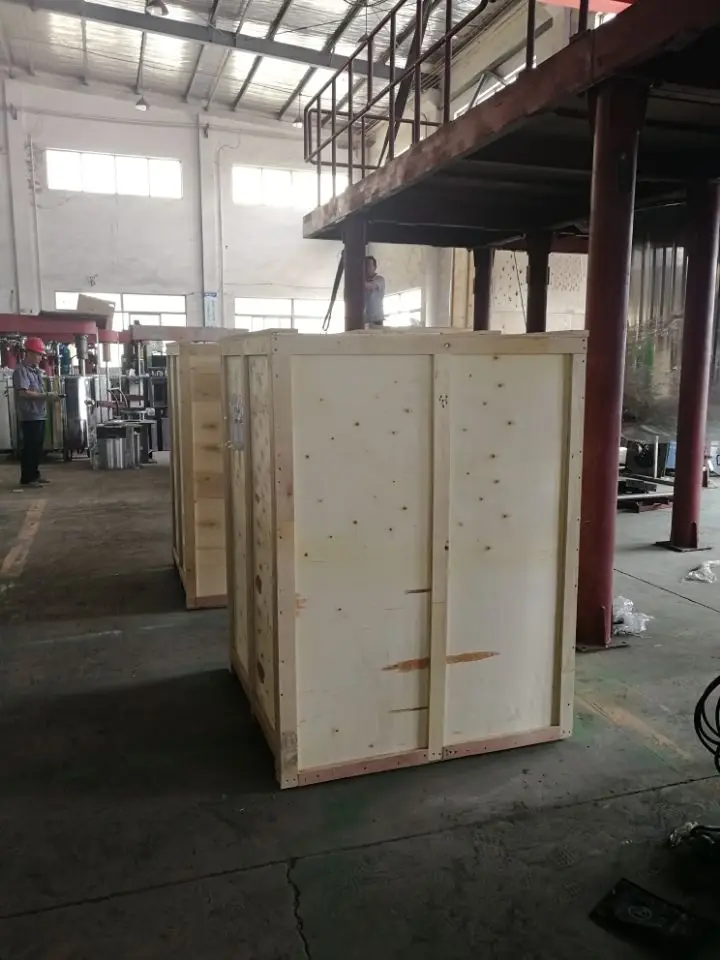
Packaging and Shipping


How to Cooperate With Us

FAQ
We're well-known as one of the leading mill liner manufacturers and suppliers in China. If you're going to buy high quality mill liner, welcome to get more information from our factory. Also, customized service is available.