

As a supplier in the Girth Gear Machining business, I've faced my fair share of challenges when it comes to ensuring the concentricity of the inner and outer diameters of a girth gear during machining. It's a crucial aspect that can make or break the performance of the gear in its application. In this blog, I'll share some tips and tricks that I've picked up over the years to help you achieve that perfect concentricity.
Understanding the Importance of Concentricity
First off, let's talk about why concentricity is such a big deal. When the inner and outer diameters of a girth gear aren't concentric, it can lead to a whole host of problems. For starters, it can cause uneven wear on the gear teeth, which shortens the lifespan of the gear. It can also result in increased vibration and noise during operation, which not only affects the performance of the machinery but can also be a safety hazard.
In applications like Ball Mill Girth Gear, where precision is key, concentricity is even more critical. A ball mill relies on the smooth rotation of the girth gear to grind materials efficiently. Any deviation in concentricity can throw off the entire operation, leading to poor grinding results and increased energy consumption.
Starting with Quality Materials
One of the first steps in ensuring concentricity is to start with high-quality materials. The material you choose for your girth gear can have a significant impact on its machinability and final concentricity. Make sure to select a material that has good mechanical properties and is free from defects.
We always source our materials from reputable suppliers and conduct thorough inspections before starting the machining process. This helps us catch any potential issues early on and ensures that we're working with the best possible material for the job.
Precise Machining Setup
Once you have your materials, the next step is to set up your machining equipment correctly. This involves aligning the workpiece accurately on the machine and ensuring that all cutting tools are properly calibrated.
We use state-of-the-art CNC machines for our Girth Gear Machining processes. These machines offer high precision and repeatability, which is essential for achieving concentricity. Before starting the machining process, we carefully program the machine to follow the exact specifications of the gear, including the inner and outer diameters.
We also pay close attention to the cutting parameters, such as feed rate and spindle speed. These parameters can affect the quality of the cut and ultimately the concentricity of the gear. By optimizing these parameters, we can ensure a smooth and accurate machining process.
Using Specialized Tools and Techniques
In addition to using high-quality machines, we also rely on specialized tools and techniques to ensure concentricity. For example, we use precision boring bars to machine the inner diameter of the gear. These bars are designed to provide a high level of accuracy and can help us achieve the desired concentricity.
We also use measuring tools, such as dial indicators and laser alignment systems, to check the concentricity during the machining process. These tools allow us to make real-time adjustments and ensure that the gear is being machined to the correct specifications.
Inspection and Quality Control
Even with the best machining setup and tools, it's still important to conduct thorough inspections and quality control checks throughout the process. We have a team of experienced quality control technicians who perform regular inspections on the gears at various stages of production.
We use a variety of inspection methods, including dimensional measurements and non-destructive testing, to ensure that the gears meet the required standards. Any gears that don't pass our quality control checks are either reworked or discarded to ensure that only the highest quality gears are delivered to our customers.
Dealing with Internal Girth Gears
When it comes to Internal Girth Gear, achieving concentricity can be even more challenging. Internal gears have a smaller diameter and are more difficult to machine compared to external gears.
To overcome these challenges, we use specialized machining techniques and tools. For example, we use internal grinding machines to achieve a high level of precision on the inner diameter of the gear. We also pay close attention to the heat treatment process, as this can affect the dimensional stability of the gear.
Continuous Improvement
Finally, we believe in continuous improvement. We're always looking for ways to improve our machining processes and techniques to ensure even better concentricity and overall quality. We stay up-to-date with the latest industry trends and technologies and invest in new equipment and training for our employees.
By constantly striving for improvement, we're able to provide our customers with the highest quality girth gears that meet their exact specifications.
Conclusion
Ensuring the concentricity of the inner and outer diameters of a girth gear during machining is a complex process that requires attention to detail and the use of high-quality equipment and techniques. By starting with quality materials, setting up the machining equipment correctly, using specialized tools and techniques, and conducting thorough inspections and quality control checks, we can achieve the desired concentricity and deliver high-quality gears to our customers.

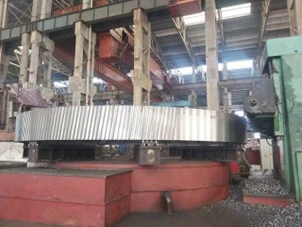
If you're in the market for high-quality girth gears, we'd love to hear from you. Whether you need a Ball Mill Girth Gear or an Internal Girth Gear, we have the expertise and experience to meet your needs. Contact us today to discuss your requirements and let's start a conversation about how we can help you with your Girth Gear Machining needs.
References
- "Gear Manufacturing Handbook" by G. Niemann and H. Winter
- "Machining Process and Machine Tools" by P.C. Sharma
- Industry standards and guidelines related to girth gear manufacturing