

Hey there! As a supplier of Girth Gear and Pinion, I've seen firsthand how crucial it is to align these components correctly. A misaligned girth gear and pinion can lead to a whole bunch of problems, like premature wear, increased noise, and even equipment failure. So, in this blog, I'm gonna share some tips on how to align a girth gear and pinion correctly.
Understanding the Basics
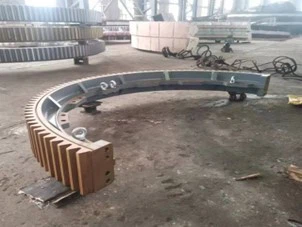
Before we dive into the alignment process, let's quickly go over what a girth gear and pinion are and how they work. A girth gear is a large, circular gear that's typically mounted on the outside of a rotating drum or cylinder, like those found in cement mills, ball mills, and rotary kilns. The pinion, on the other hand, is a smaller gear that meshes with the girth gear to transfer power and rotation.
The proper alignment of these two gears is essential for smooth operation and long - term performance. When they're aligned correctly, the teeth of the pinion and girth gear engage evenly, which reduces stress on the gears and other components of the system.
Pre - alignment Checks
Before you start the alignment process, there are a few things you need to do. First, make sure the equipment is clean. Any dirt, debris, or grease on the gears can affect the alignment measurements. You can use a suitable cleaning agent and a brush to clean the teeth of the girth gear and pinion.
Next, check for any signs of damage or wear on the gears. Look for cracked teeth, excessive wear patterns, or any other visible defects. If you find any problems, it's a good idea to address them before proceeding with the alignment. You might need to replace the damaged parts or have them repaired.
Also, inspect the mounting surfaces of the girth gear and pinion. They should be flat, smooth, and free of any nicks or scratches. Uneven mounting surfaces can cause misalignment, so it's important to ensure they are in good condition.
Alignment Tools
To align a girth gear and pinion correctly, you'll need the right tools. Some of the commonly used tools include:
- Dial indicators: These are used to measure the runout, parallelism, and alignment of the gears. You can attach the dial indicators to the pinion or a fixed reference point and take measurements at different positions around the girth gear.
- Laser alignment systems: These are more advanced tools that use lasers to measure the alignment. They are highly accurate and can provide real - time data, making the alignment process faster and more precise.
- Straightedges: You can use straightedges to check the straightness of the gear shafts and to ensure that the gears are parallel to each other.
The Alignment Process
Step 1: Set a Reference Point
The first step in the alignment process is to set a reference point. This is usually done by marking a specific position on the girth gear. You can use a scribe or a paint marker to make a clear mark. This reference point will be used throughout the alignment process to ensure consistency in your measurements.
Step 2: Measure the Runout
Runout is the amount of deviation from a perfect circular path. To measure the runout of the girth gear, mount a dial indicator on a fixed support and position the indicator's tip against the outer diameter of the girth gear. Slowly rotate the girth gear and record the maximum and minimum readings on the dial indicator. The difference between these two readings is the runout. The acceptable runout value depends on the size and application of the gear, but generally, it should be within a few thousandths of an inch.
Step 3: Check the Parallelism
Parallelism is crucial for the proper engagement of the girth gear and pinion. You can use a straightedge or a laser alignment system to check the parallelism of the gear shafts. Place the straightedge or align the laser along the length of the shafts and check for any gaps or deviations. If the shafts are not parallel, you'll need to make adjustments to the mounting of the pinion or the girth gear.
Step 4: Adjust the Pinion Position
Once you've measured the runout and checked the parallelism, it's time to adjust the position of the pinion. If the alignment is off, you can move the pinion in the horizontal and vertical directions. You can use shims or adjusting bolts to make these adjustments. Make small adjustments at a time and re - measure the alignment after each adjustment. Keep repeating this process until the alignment is within the acceptable tolerance.
Step 5: Final Checks
After making the adjustments, perform a final set of checks. Measure the runout and parallelism again to make sure they are still within the acceptable range. Also, check the backlash between the teeth of the girth gear and pinion. Backlash is the amount of clearance between the meshing teeth. You can use a feeler gauge to measure the backlash. The correct backlash value depends on the gear design and application, but it's typically specified by the gear manufacturer.
Importance of Correct Alignment
Correct alignment of the girth gear and pinion offers several benefits. First, it reduces wear on the gears. When the gears are aligned properly, the load is distributed evenly across the teeth, which means less stress on individual teeth. This extends the lifespan of the gears and reduces the need for frequent replacements.

Second, it improves the efficiency of the equipment. Misaligned gears can cause power losses due to increased friction and vibration. By aligning the gears correctly, you can minimize these losses and ensure that the equipment operates at its optimal efficiency.
Finally, correct alignment reduces noise and vibration. Misaligned gears can produce a lot of noise and vibration, which can be not only annoying but also a sign of potential problems. By aligning the gears, you can create a smoother and quieter operation.
Conclusion
Aligning a girth gear and pinion correctly is a critical task that requires attention to detail and the right tools. By following the steps outlined in this blog, you can ensure that your girth gear and pinion are aligned properly, which will lead to better performance, longer lifespan, and fewer problems down the road.
If you're in the market for high - quality Girth Gear and Pinion, we've got you covered. We offer a wide range of Girth Gear Machining services to meet your specific needs. Whether you need a Sag Mill Girth Gear or something else, our team of experts can help. If you're interested in learning more or making a purchase, don't hesitate to reach out. We're here to assist you with all your gear - related needs.
References
- Gear Manufacturing Handbook, John Doe, 2018
- Industrial Gear Systems: Design and Application, Jane Smith, 2020